The Hybrid Shift: Why Global Automakers Are Rethinking the All-Electric Future
As market conditions grow more complex, global automakers in 2026 are shifting from rapid electrification to strategic flexibility. Explore why the industry is expanding investments in hybrid technologies to balance infrastructure limits, battery costs, and real-world consumer demands without abandoning its long-term EV goals.
Here is a clean, professionally formatted, and highly scannable version of your text in English, completely free of tables.
Why Global Automakers Are Reassessing Their Electric Vehicle Strategies and Turning Back to Hybrids
Over the past decade, the automotive industry has undergone one of the most significant transformations in its history. Driven by environmental regulations, technological advancements, and changing consumer expectations, major manufacturers announced ambitious plans to transition toward fully electric vehicle (EV) lineups.
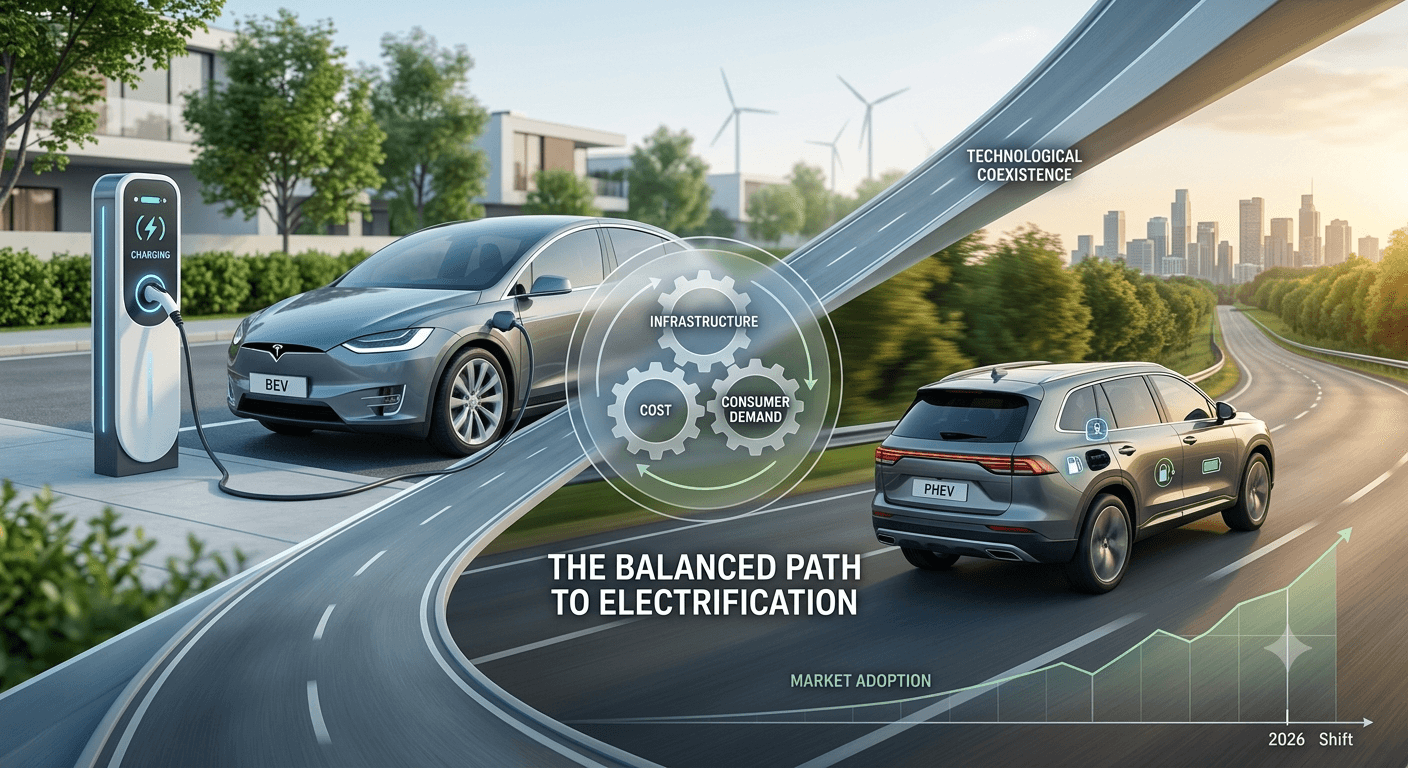
However, 2026 has brought a noticeable shift in strategy. While electric vehicles remain a critical part of the industry's future, many global automakers are revisiting their timelines and expanding investments in hybrid technologies. Rather than signaling a retreat from electrification, this development reflects a more pragmatic approach to meeting market realities and customer needs.
From Rapid Electrification to Strategic Flexibility
In recent years, automotive manufacturers invested billions of dollars in electric vehicle development, battery production, and charging infrastructure partnerships. Industry forecasts suggested that EV adoption would accelerate rapidly across major markets, leading to a significant decline in internal combustion engine vehicles.
Yet market conditions have proven more complex than anticipated:
- Moderating Growth Rates: While EV sales continue to grow globally, growth rates have softened in several key regions.
- A Diversified Approach: Instead of relying exclusively on an all-electric future, companies are increasingly embracing a mixed portfolio that includes electric, hybrid, and plug-in hybrid vehicles.
Key Challenges Facing Electric Vehicle Adoption
Several interconnected factors have contributed to the industry's reassessment of its EV timelines:
- 1. Charging Infrastructure LimitationsAlthough networks continue to expand, infrastructure development remains uneven. Concerns about charging availability, charging times, and long-distance travel continue to influence purchasing decisions for many consumers.
- 2. Battery Costs and Supply ChainsBattery technology has improved significantly, but production remains one of the most expensive components of EV manufacturing. Additionally, supply chain pressures and raw material availability continue to affect production costs and pricing strategies.
- 3. Diverse Market RequirementsConsumer needs vary considerably across regions. While some markets are well-positioned for rapid EV adoption, others require more flexible mobility solutions due to infrastructure constraints, driving habits, climate conditions, or economic considerations.
- 4. Consumer Purchasing BehaviorMany buyers seek vehicles that offer improved fuel efficiency without completely changing their driving or refueling habits. This has spiked interest in hybrid models, which provide a balance between traditional and electric powertrains.
Why Hybrids Are Regaining Momentum
Hybrid vehicles are increasingly viewed as a practical bridge between conventional internal combustion vehicles and fully electric transportation.
The Hybrid Advantage: By combining electric motors with gasoline engines, hybrids can improve fuel economy, reduce emissions, and enhance driving efficiency without requiring dedicated charging infrastructure.
Recognizing this demand, several global manufacturers have announced expanded hybrid portfolios and renewed investments in hybrid technologies, viewing them as an essential component of their medium-term product strategies.
The Future of Mobility: Multiple Technologies, Not One
One of the most important lessons the automotive industry has learned is that the future of mobility is unlikely to be defined by a single technology. Instead, the market is evolving toward a diversified ecosystem that includes:
- Battery Electric Vehicles (BEVs)
- Hybrid Electric Vehicles (HEVs)
- Plug-in Hybrid Electric Vehicles (PHEVs)
- Alternative Fuel and Emerging Energy Technologies
This multi-pathway approach allows automakers to respond more effectively to varying consumer needs while supporting long-term sustainability goals.
What This Means for Consumers
For consumers, the industry's shift toward a broader technology mix creates greater flexibility and choice.
- Tailored Selection: Buyers can select vehicles based on their specific driving patterns, infrastructure availability, budget considerations, and environmental priorities.
- Accelerated Innovation: Increased competition among manufacturers is expected to drive technological advancements, improve vehicle efficiency, and enhance overall value for customers.
Looking Ahead
The recent resurgence of hybrid vehicles should not be interpreted as a rejection of electric mobility. Rather, it represents a strategic adjustment as automakers navigate evolving market conditions and customer expectations.
Electric vehicles will undoubtedly remain a cornerstone of the automotive industry's future. However, the path toward full electrification is proving to be more gradual and diverse than originally anticipated. The coming years will likely be defined by technological coexistence, where electric, hybrid, and other advanced propulsion systems work together to support a more sustainable and adaptable transportation landscape.
References
- International Energy Agency (IEA). Global EV Outlook 2025https://www.iea.org/reports/global-ev-outlook-2025
- International Energy Agency (IEA). Electric Vehicleshttps://www.iea.org/energy-system/transport/electric-vehicles
- European Automobile Manufacturers' Association (ACEA). Industry Statistics and Market Trendshttps://www.acea.auto
- McKinsey & Company. The Road Ahead for Electric Vehicleshttps://www.mckinsey.com/industries/automotive-and-assembly
- Deloitte. Global Automotive Consumer Study 2025https://www.deloitte.com
- International Council on Clean Transportation (ICCT). Global Passenger Vehicle Market Analysishttps://theicct.org
- BloombergNEF (BNEF). Electric Vehicle Market Research and Outlookshttps://about.bnef.com