Strait of Hormuz: How Recent Developments are Impacting Vehicle Exports from Dubai
Explore how recent 2026 developments in the Strait of Hormuz are reshaping freight costs, insurance premiums, and supply chain strategies for Dubai's thriving vehicle export sector—and why the UAE's logistics ecosystem remains uniquely resilient.
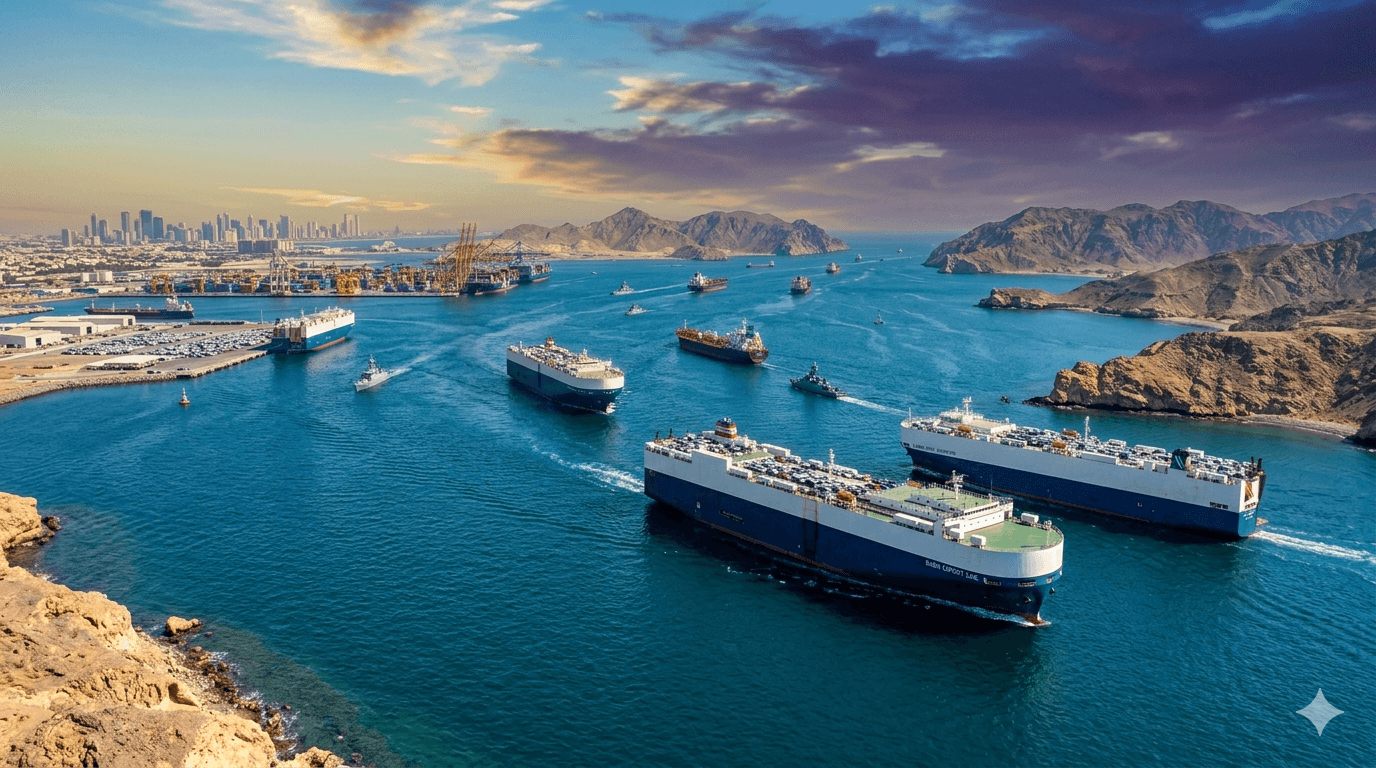
Strait of Hormuz: A Critical Maritime Gateway for Global Automotive Trade
The Strait of Hormuz remains one of the most strategically important shipping corridors in the world. Connecting the Arabian Gulf to international markets through the Gulf of Oman and the Arabian Sea, this vital waterway serves as a major artery for energy supplies, commercial cargo, and global trade flows.
For Dubai's automotive sector—particularly companies engaged in exporting and re-exporting new vehicles to Africa, the Middle East, and emerging international markets—uninterrupted maritime access is essential.
- Direct Impact: Any disruption to shipping routes directly affects freight costs, insurance premiums, delivery schedules, and overall supply chain efficiency.
- Focal Point: As geopolitical tensions have persisted into 2026, the Strait has once again become a central focus for international trade and logistics risk management.
Recent Shipping Developments (First Half of 2026)
During recent months, concerns regarding maritime security increased following renewed regional tensions and discussions surrounding potential restrictions on vessel movements through the Strait. Despite this heightened uncertainty, the current operational landscape shows resilience:
- Continued Commercial Activity: Oil tankers, container vessels, and Roll-on/Roll-off (Ro-Ro) vehicle carriers have maintained steady operations by implementing additional security protocols.
- Spike in Insurance Costs: Marine insurers have responded by reserving regional exposure, leading to increased war-risk insurance premiums for vessels transiting Gulf waters.
- Contingency Planning: While maritime traffic remains active without structural interruptions, shipping companies are maintaining strict proactive plans in the event of further escalation.
Why the Strait of Hormuz Matters to Dubai's Vehicle Export Industry
Dubai has established itself as one of the world's leading automotive trading and re-export hubs, supported by advanced logistics infrastructure. However, the automotive export sector is highly sensitive to maritime volatility across four main areas:
1. Rising Freight Costs
Periods of geopolitical uncertainty frequently drive up shipping rates for both containerized cargo and Ro-Ro vehicle carriers. For exporters, these higher transportation costs squeeze profit margins and impact pricing competitiveness in destination markets.
2. Increased Marine Insurance Premiums
Insurance providers introduce additional risk premiums when vessels operate within elevated-risk zones. These additional charges are passed down, directly bloating overall logistics and shipping budgets.
3. Potential Delivery Delays
Shipping lines may adjust sailing schedules, implement enhanced security checks, or alter operational routing. These safety measures can lead to longer transit times, creating supply bottlenecks for overseas distributors awaiting vehicle deliveries.
4. Supply Chain Management Challenges
Any disruption to shipping schedules ripples through the entire business model—affecting inventory planning, financing costs, warehouse utilization, and ultimate customer fulfillment timelines.
What a Potential Closure Would Mean
Analytical Note: Although a prolonged closure of the Strait of Hormuz remains a low-probability scenario, its potential impact on global trade would be immediate and severe.
Should a closure or severe restriction occur, the global automotive trade industry faces several cascading consequences:
- Sharp Increases in Global Oil & Energy Prices: This would lead to escalating manufacturing costs, higher operational overheads, and heavy fuel surcharges across the board.
- Spike in International Shipping Costs: Ocean freight rates would climb rapidly, resulting in higher vehicle prices being passed down to the end consumer.
- Reduced Shipping Capacity Across Gulf Routes: Vehicle shortages would emerge alongside massive inventory allocation bottlenecks at key transit ports.
- Extended Delays in Global Supply Chains: Stagnant inventory and disrupted regional distribution would make it incredibly difficult for exporters to hit their seasonal sales targets.
Dubai's Strategic Advantage: Resilience in Motion
Despite external maritime pressures, the United Arab Emirates possesses one of the world's most sophisticated logistics ecosystems, giving vehicle exporters the flexibility needed to navigate disruptions:
- World-Class Port Infrastructure: Seamless operations led by global hubs like Jebel Ali Port.
- Multimodal Connectivity: Extensive road and air freight networks offering viable alternative transport routes.
- Specialized Facilities: Dedicated automotive logistics zones and free zones tailored for rapid vehicle handling.
- Streamlined Customs: Efficient, digitized customs and re-export processes designed to reduce transit friction.
Outlook for the Second Half of 2026
Current market indicators suggest that shipping activity through the Strait of Hormuz will continue steadily, though risk levels and operational caution will remain elevated throughout the remainder of the year. Industry observers expect:
- Sustained volatility in ocean freight rates.
- Elevated marine insurance premiums remaining the baseline for the foreseeable future.
- Increased emphasis on supply chain resilience, with companies diversifying forward inventories and choosing strategic trade hubs.
- Continued strong demand for vehicle exports from Dubai due to its robust market reliability and deep liquidity.
Conclusion
Staying informed about maritime developments in the Strait of Hormuz is no longer optional—it is a core component of risk management for any vehicle exporter operating out of Dubai. By maintaining operational flexibility, utilizing proactive logistics management, and building resilient supply chain strategies, automotive businesses can successfully protect their competitiveness and drive international growth through the second half of 2026.
Strategic References
- Reuters – Commercial Shipping and Tanker Traffic Through the Strait of Hormuz (June 2026).
- UNCTAD – Global Trade and Maritime Transport Outlook 2026.
- International Energy Agency (IEA) – Global Energy Markets and Strategic Maritime Chokepoints.
- Lloyd's List Intelligence – Maritime Risk Assessment and Gulf Shipping Developments.
- DP World – Trade and Logistics Performance Reports 2026.